
Quest for Understanding Transcends Religious Boundaries
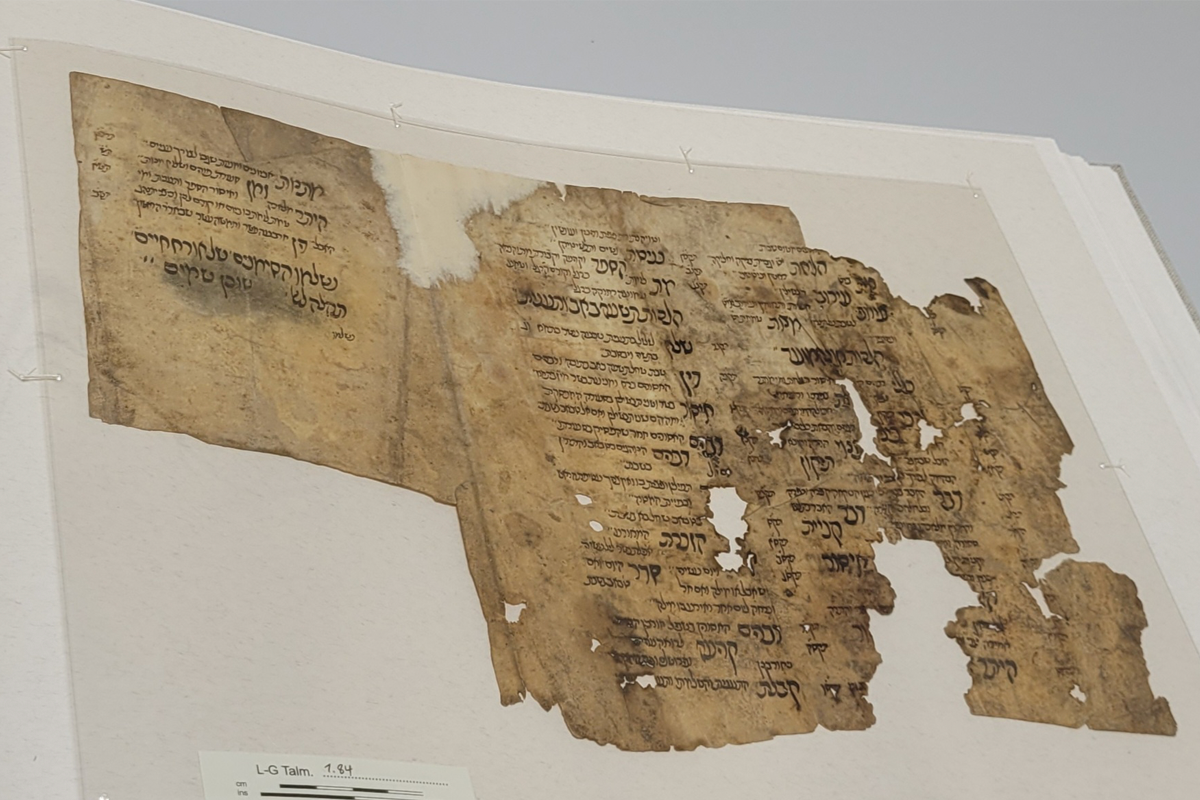
Thirty-five years ago, I visited the ancient Ben Ezra synagogue deep in the heart of the Old City of Cairo. Built on the site of the Well of Moses, it commemorates the place where the baby Moses was watched over by his sister until rescued by the pharaoh’s daughter. In this same synagogue, Maimonides led prayers in the 12th century when he was the leader of the Jewish community in Egypt.
When I visited in 1991, it was quiet; tourism was still low due to the Gulf War. Clearly, the caretaker was a little bored. Come, he said, ‘I will show you the genizah.” A genizah is a repository where Jewish communities traditionally deposited worn or damaged sacred texts. Over time, however, some genizot, including the Cairo Genizah, also accumulated a remarkable variety of everyday documents, preserving an unparalleled record of medieval Jewish life.
He took me on a roundabout route up into the women’s gallery, and I began to question my choices. No one was around. Suddenly, before me was a rickety ladder reaching up to a dark recess in the wall above. As I hesitated, the caretaker scurried up ahead of me and disappeared into the genizah.
I made it up the rickety ladder to find the genizah empty, as the treasure trove of documents had been removed long before for study and preservation. But the experience stirred my imagination and got me excited about what these documents and this place had contributed to the scholarly world.
Seven years earlier, in the autumn of 1984, I had made my first pilgrimage to Mt. Sinai. There, through a friend’s connections, I had the rare opportunity to get a tour of the library at St. Catherine’s Monastery. I got to see how the manuscripts were kept and where the monks had read from them and copied them. I also learned about two women from Scotland who not only helped to organize materials in the library but also helped to return stolen manuscripts that occasionally showed up on the antiquities market.
Many years later, I came across a copy of a book, The Sisters of Sinai, by Janet Soskice, which was published in 2007 and has since informed much of what I know about these sisters’ lives. The book tells the story of identical twin sisters from Scotland who, in the late 19th century, became pioneering biblical scholars, linguists, and manuscript collectors.
Known as “the Sisters of Sinai,” Agnes Smith Lewis (1843–1926) and Margaret Dunlop Gibson (1843–1920), devoted their lives to scholarship, and, despite being denied access to formal a university degree at Cambridge, were well-read and had mastered numerous languages, including Greek, Hebrew, Syriac, Arabic, and Palestinian Aramaic. They were especially interested in the Middle East and made many trips to Egypt. During these visits they often stayed at St. Catherine’s Monastery at the base of Mt. Sinai.
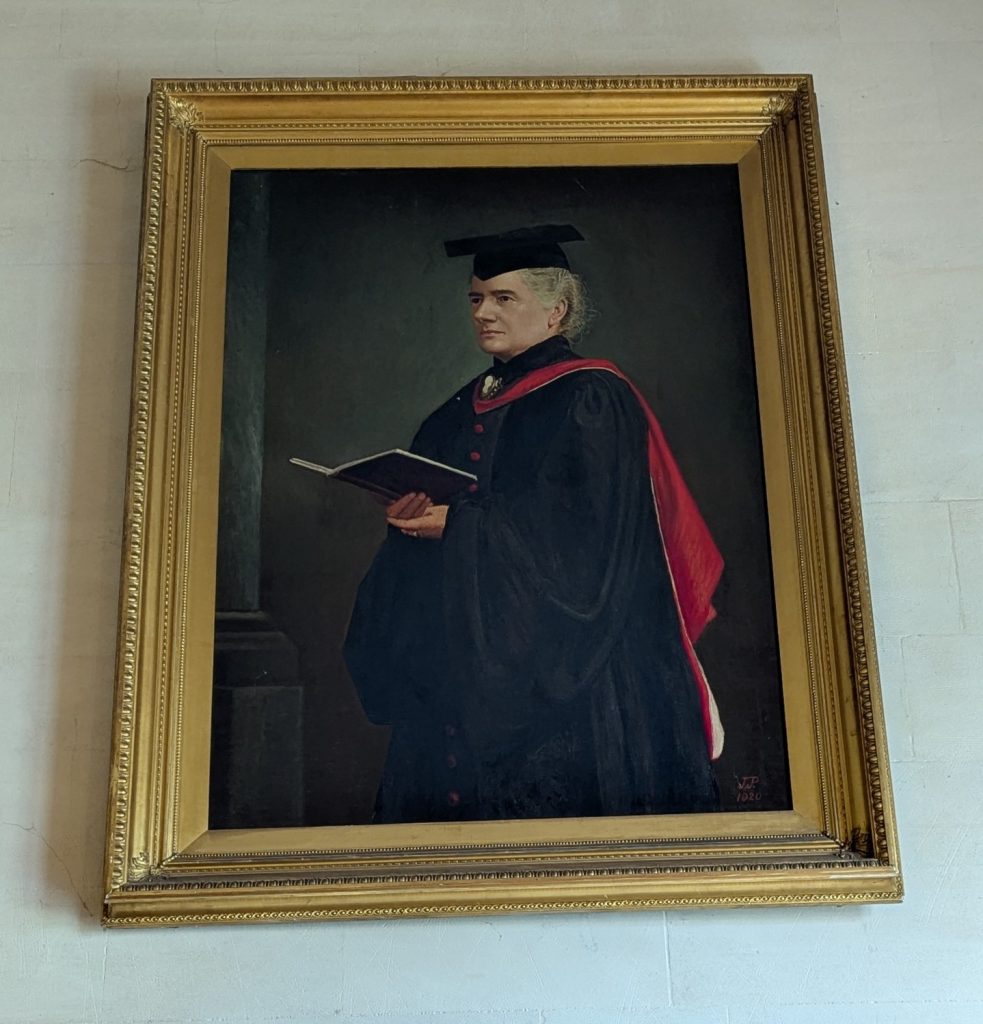
Margaret Dunlop-Gibson 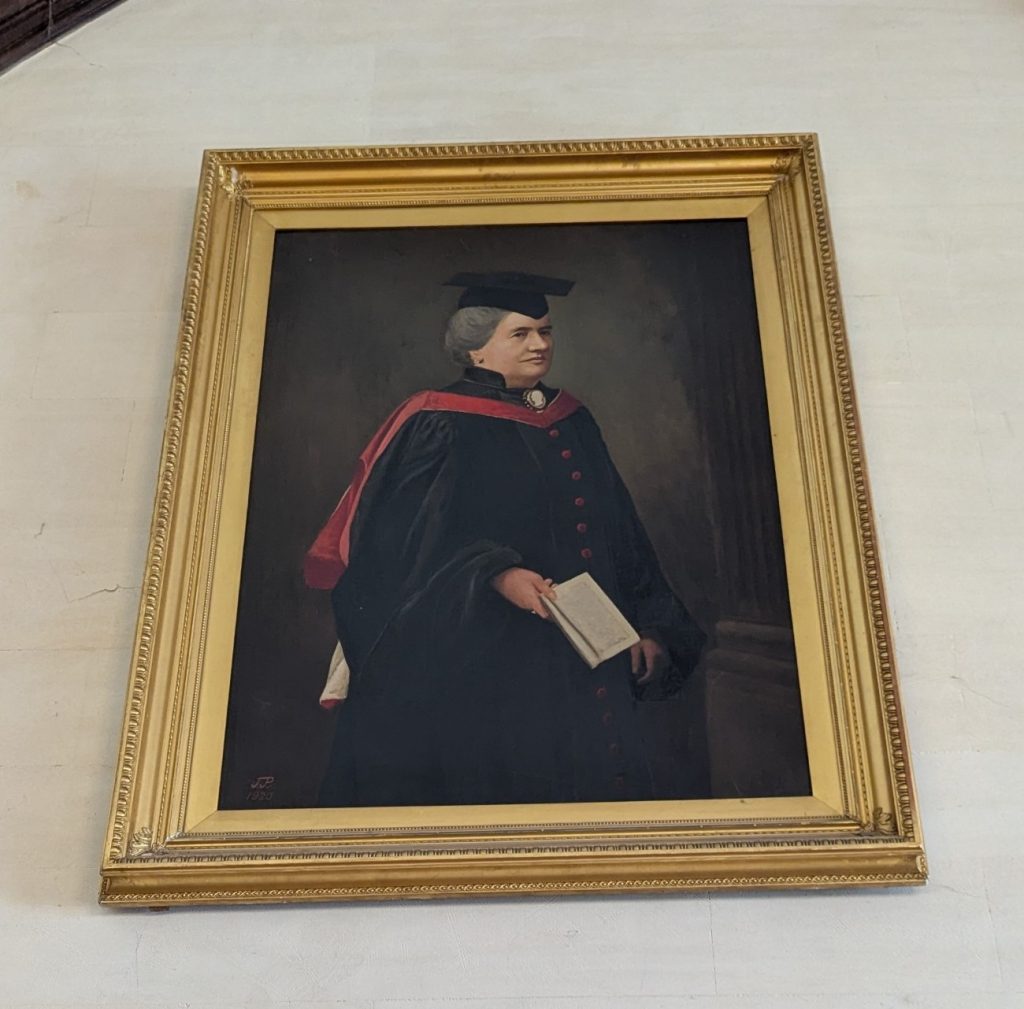
Agnes Smith-Lewis
In 1892, during one of these visits, Agnes noticed a faded Syriac manuscript whose original writing had been scraped away and overwritten — a type of manuscript known as a palimpsest. Careful examination revealed that the erased text contained an ancient Syriac translation of the Gospels. The manuscript, now known as the Syriac Sinaiticus or the Sinai Palimpsest, became one of the earliest surviving witnesses to the text of the New Testament and remains an important resource for biblical scholarship.
This discovery was only a small part of the sisters’ contribution. Agnes devoted herself to the study and publication of Syriac manuscripts, while Margaret specialized in Arabic manuscripts. Together they cataloged large portions of the monastery’s remarkable library, published critical editions and translations, and introduced many previously unknown texts to the scholarly world. Their research significantly advanced the study of Syriac Christianity, biblical textual criticism, and the history of the Christian East.
In the spring of 1896, the sisters were traveling through Egypt, and while they were in Cairo, they visited antiquities dealers, purchasing bundles of old manuscript fragments written in Hebrew, Arabic, and other languages. This purchase unknowingly set in motion events that led to the scholarly recognition of what became known as the Cairo Genizah.
When the sisters returned to Cambridge, they invited their friend Solomon Schechter, a reader in Rabbinics at Cambridge University, to examine their latest purchases. Schechter recognized one fragment as part of the Hebrew original of the Book of Ben Sira (Ecclesiasticus) — a text that scholars had previously known primarily through Greek and other translations. Realizing that if one page of the Hebrew Ben Sira had survived, there might be many more, Schechter followed the trail back to Old Cairo and the Ben Ezra Synagogue.
Over many centuries, the synagogue’s genizah had accumulated an extraordinary archive of manuscript fragments, dating from roughly the 9th through the 19th centuries. Approximately 200,000 fragments were collected, and although they are dispersed across many libraries and private collections world-wide, the largest portion is preserved at the University of Cambridge. https://cudl.lib.cam.ac.uk/collections/genizah/1
This month, on a recent visit to Cambridge, England, I had the opportunity to view some of the manuscript fragments that were found in the Ben Ezra genizah. A researcher from the Genizah Unit of University of Cambridge Libraries spent over an hour meeting with my spouse and I and showing us some of the treasures of the collection. While viewing these priceless pieces, I couldn’t help thinking about that first visit to the Ben Ezra Synagogue and my opportunity to peek into the empty genizah.
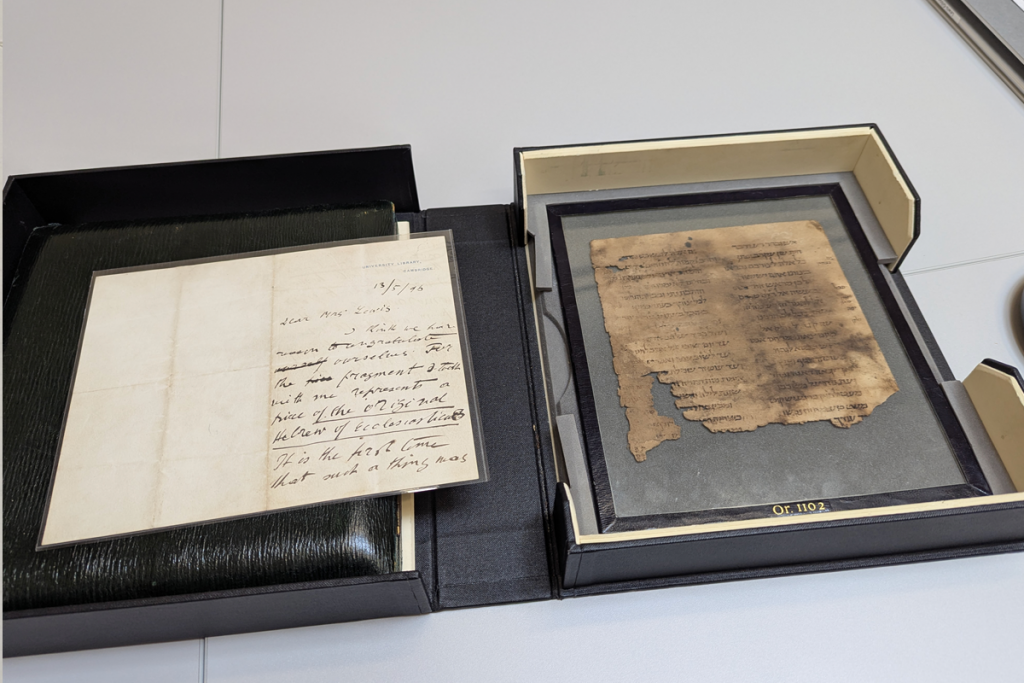
Standing in the Genizah Unit in Cambridge, I was struck that the manuscripts before me represented more than remarkable discoveries. They tell a story of Jewish, Christian, and Muslim communities whose histories have long been intertwined. Christian monks preserved biblical manuscripts at Sinai. Jewish communities safeguarded centuries of religious and everyday life in the genizah of the Ben Ezra Synagogue. Both collections, that of the Ben Ezra synagogue and the monastery of St. Catherine, endured within the cultural world of medieval Egypt and now invite scholars of every background to study them together. Their survival reminds us that libraries and archives are not merely repositories of books, they are places where the shared human quest for understanding transcends religious boundaries.
Karla Grafton is the Director of Library Services at Hartford International University for Religion and Peace.