
What Thriving Congregations Look Like Today: Attendance, Belonging, Participation, and Resilience
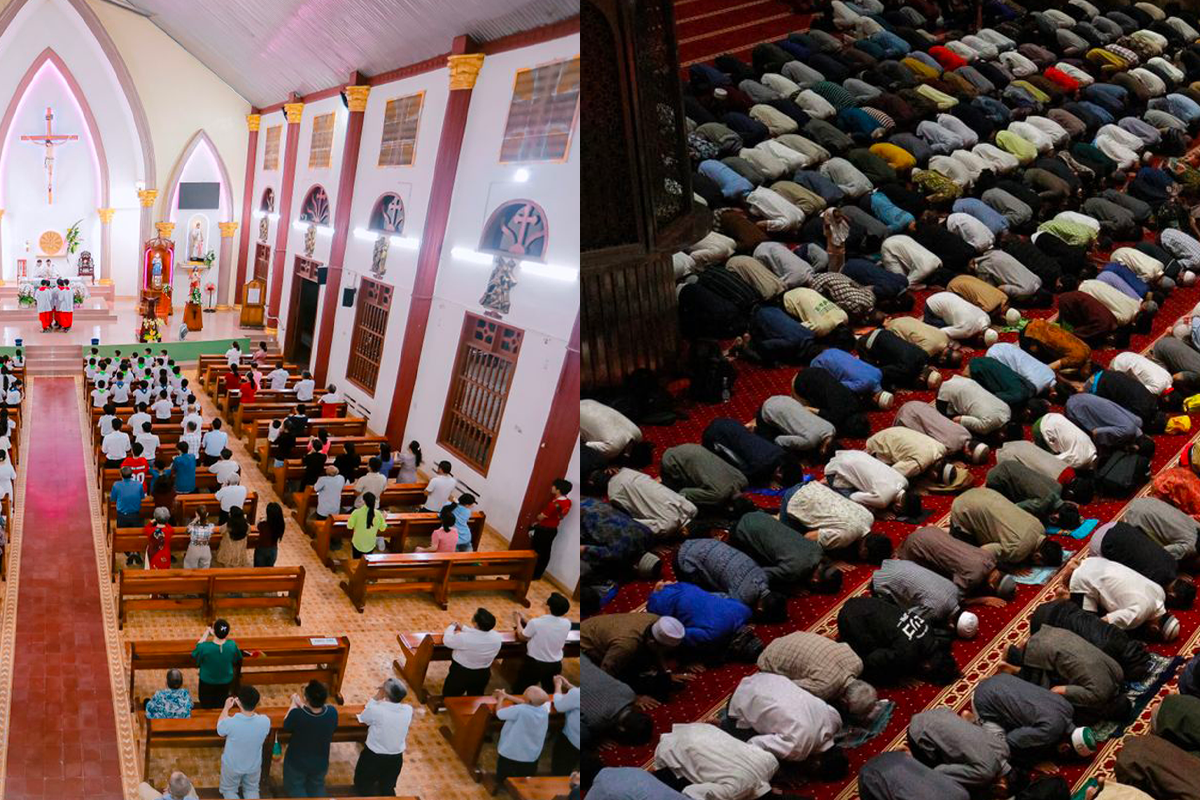
After COVID-19 disrupted nearly every faith community, new HIRR research points to gains in attendance, volunteer participation, and clergy well-being – indicators that congregational life is recovering.
Five years ago, many congregations were asking how they would make it through the pandemic. New research from the Exploring the Pandemic Impact on Congregations (EPIC) project at the Hartford Institute for Religion Research (HIRR) offers a comprehensive look at where congregations stand today.
The findings come from “Signs of Rebound Amid Uneven Recovery: The Changing Congregational Landscape,” a national study funded by Lilly Endowment Inc. and conducted as part of the Faith Communities Today (FACT) research collaborative, which has tracked congregational life since 2000. Researchers surveyed 7,453 congregations across 79 denominations and faith traditions between September and December 2025 and compared the results with more than two decades of FACT data.
What the 2025 congregation report tells us
For the first time in 25 years of tracking, median worship attendance has gone up, and more congregations are stabilizing or growing rather than shrinking. Financial giving has increased, and median congregational income has exceeded inflation-adjusted expectations. Volunteer engagement and program activity have largely recovered, and clergy well-being is improving after years of strain.
American congregational life appears to have entered a new phase marked by resilience and cautious optimism. However, the recovery has not reached every congregation equally.
A meaningful, but uneven, rebound
Nearly half of congregations are still declining, and many small congregations remain under real strain. Only 18% of congregations with 50 or fewer attendees describe themselves as optimistic about the future, compared with 71% of congregations with over 250. Mainline Protestant congregations continue to experience steep declines in attendance. Much of the reported growth also reflects people moving between congregations rather than an expansion of religious participation overall. Even so, many congregations have moved past pandemic-era survival mode and found steadier, more hopeful ground.
Attendance
Just before the pandemic, median worship attendance was 65, meaning half of congregations drew more than 65 people and half drew fewer. That figure fell to 45 in 2021 before climbing to 70 in 2025. This is the first recorded increase since FACT began tracking attendance in 2000.
The current median is well below the 137 recorded in 2000. Still, the 2025 increase marks a notable change in direction after 25 years of decline. Between 2020 and 2025, 43% of congregations grew by at least 5%, while another 12% held steady.
“[The pandemic] brought more people into the congregation who were looking for social fellowship after being distant,” one leader reported.
A separate EPIC study of church attendees adds context to that observation. It found that 38% of attendees had joined their current congregation within the previous five years. Most (69%) had switched from another congregation, others (22%) returned after a long time away from a faith community, and just 8% joined a congregation for the first time.
Online worship also remains common. In 2025, 69% of congregations offered virtual services, down from 75% in 2023, with a median of 20 online participants each week. Livestreaming use has doubled since 2020, as has electronic giving. The report does not attribute the attendance rebound to technology, but these tools continue to give congregations ways to stay present in people’s lives beyond Sunday morning.
Belonging
Faith leaders across a range of traditions describe a deeper sense of connection with their congregations than they had before the pandemic, along with a renewed commitment to their surrounding communities.
“Actually, the pandemic brought the congregation closer to each other. There’s an increase in giving. People are more generous,” one leader wrote.
In 2025, 39% of leaders strongly agreed that their congregation was spiritually vital and alive, while 33% said their congregation was actively involved in its local community. These are both increases from the 2023 figures. Additionally, nearly half (46%) of attendees reported increasing their financial contributions over the past five years, according to 2024 survey data.
Diversity is a growing priority for many faith leaders. The share of leaders who strongly agree that their congregation is striving to be diverse — racially, ethnically, and socioeconomically — rose from 20% in 2023 to 27% in 2025. That said, this is an aspirational indicator, measuring intent rather than a demographic outcome the survey tracks directly.
“[The pandemic] has brought us together as a congregation and focused us on strengthening outreach and service to the community. We have become a more open and welcoming congregation,” reported another.
Participation
People are reengaging within congregational life. For many congregations, recovery is more than weekly attendance counts and depends on a faith community providing people with opportunities to build relationships with one another, contribute in service to others, and take part in a shared mission.
“Those who stayed, and who have come since, are stronger, more generous, and better able to meet the challenges of our congregation,” one leader wrote.
Volunteer participation offers another measure of involvement. It had fallen to 15% during the pandemic, but by 2025, congregational leaders estimated that 40% of their participants were volunteering regularly, which is a return to pre-pandemic levels.
Programming beyond worship is recovering, too, although not at the same pace in every area. Many congregations scaled back fellowship gatherings, prayer groups, religious education, activities for children and youth, social justice initiatives, and community service during the pandemic. By 2025, most forms of programming had returned close to their 2020 levels. Programs for young adults and older adults had risen above their earlier levels, while community service programming has been slower to recover.
Resilience
Thriving congregations are doing more than restoring what existed before the pandemic. Many are actively discerning what still serves their mission, what’s overdue for change, and what may need to be left behind.
“[The pandemic] helped us to move forward, shedding old ways and embracing new ways and new people,” one leader reported.
In 2025, 29% of congregations strongly agreed with the statement, “our congregation is willing to change to meet new challenges,” a higher share than in most pre-pandemic FACT surveys. 72% also said they were identifying and embracing new ministry opportunities, up from 65% in 2023. Willingness to change correlates closely with other signs of congregational vitality. The pandemic required congregations to experiment, often before they felt ready. This may have left some more flexible and open to reevaluating what’s established to better respond to changing community needs.
“We were able to develop new ministries and ways of ministering as a result of COVID. It caused us to really evaluate everything we were doing,” another leader said.
For some congregations, that evaluation led to new ministries or new ways of reaching people. For others, it prompted a deeper reassessment of priorities and practices. In both cases, resilience required making decisions about what should come next.
Congregational and ministry leaders well-being
Congregational resilience also depends on the well-being of those who lead them. After several years of heightened strain, clergy reported improvements in their physical, mental, spiritual, relational, and financial health in 2025. The largest gains were in mental and spiritual health, which rose notably from their recorded lows in late 2023.
Fewer clergy also reported seriously considering leaving ministry. In 2025, 58% said they never think about leaving the profession, and 69% said they had never seriously considered leaving their current congregation for another. Both are a marked improvement over previous years, when growing numbers of faith leaders said they were considering leaving their current congregations or exiting the ministry profession altogether.
The clearest sign of vitality in 2025 may be the improved outlook among congregational leaders. 58% said their congregations were “somewhat” or “much stronger” than before the pandemic, and nearly three-quarters expected a positive trajectory ahead, whether through continued growth or basic stability. While burnout and vocational strain have not disappeared, the findings indicate that more clergy are regaining a measure of stability.
What this means for today’s faith leaders
The conditions of ministry have changed, perhaps permanently, and post-pandemic recovery is taking different forms. Some congregations are finding new energy and direction, while others continue to struggle with challenges that began long before the pandemic.
Even amid those challenges, the opportunities to strengthen connection, try new approaches, and clarify their purpose are real for congregations willing to pursue them. For faith leaders, that starts with understanding what’s happening in their own congregations and communities. That means looking closely at who is participating, where connection is growing or weakening, and which established practices still serve the mission.
HIU’s Doctor of Ministry program helps experienced faith leaders examine questions like these through applied research and reflective practice. DMin program students develop the insight and judgment to understand change, identify emerging needs in their own contexts, and make thoughtful decisions about what to preserve, change, or build anew. They graduate prepared to lead their communities toward what comes next with clarity and intention.
Tags: thriving congregations today and what it means for ministry leaders, what thriving congregations look like