
Case Studies in Coexistence: What Historical Christian-Muslim Encounters Teach Us
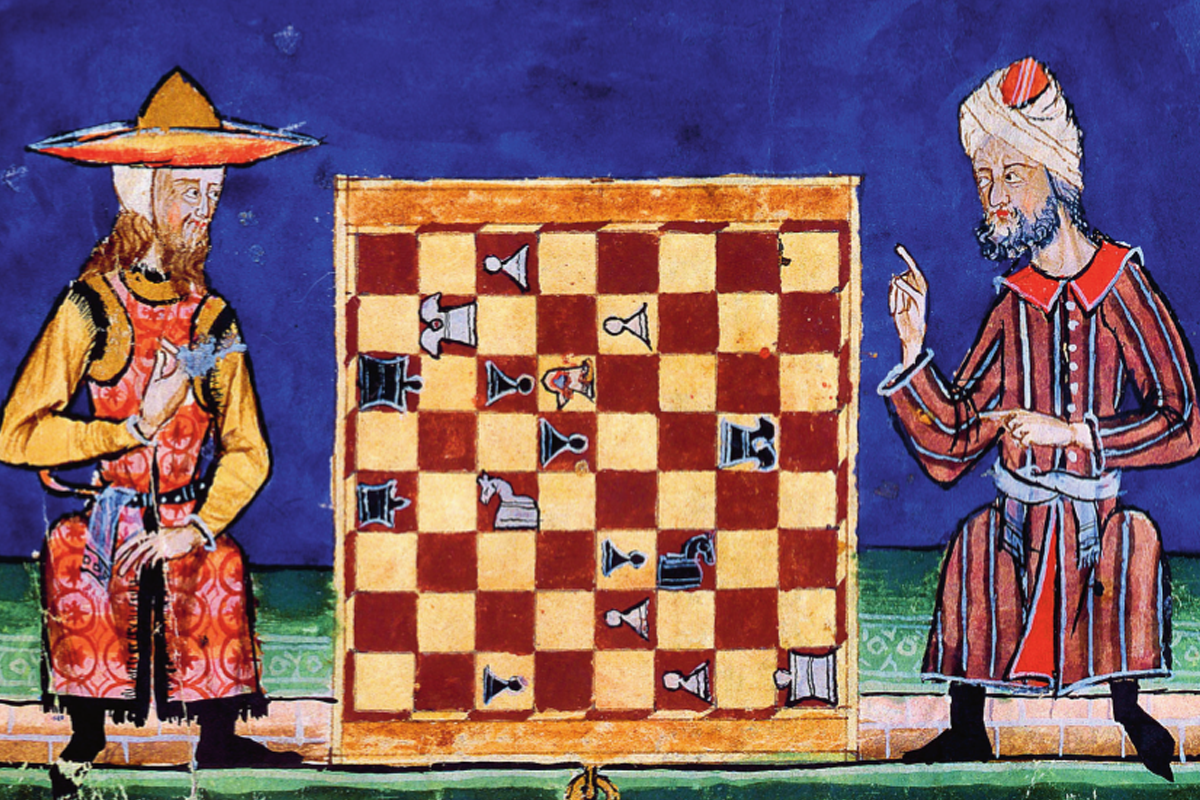
This three-part series explores medieval Iberia, Abbasid Baghdad, and Ottoman Istanbul as major historical settings where Christians, Muslims, and Jews navigated complex intellectual and civic worlds together.
These societies were neither utopias nor merely theaters of conflict. They were real places where people of different faiths lived in close proximity, crossing cultural boundaries, and engaging in shared life and scholarship within legal and political systems that both enabled and limited coexistence.
By revisiting these histories, we gain insight into the conditions that made interreligious life possible, where it faltered, and why these age-old questions still matter today.
Case Studies in Coexistence, Part 1 – Learning at the Crossroads: Córdoba, Toledo, and the Iberian World
When studying interfaith relations, history rarely offers simple lessons. Conversations about coexistence often default to one of two extremes: a nostalgic view that reimagines past centuries as eras of effortless harmony, or one so narrowly focused on conflict that it overlooks the rich exchanges, learning, and shared lives that also defined multifaith societies. Neither captures the full story.
The medieval Iberian world offers a more honest and instructive starting point. In cities such as Córdoba and Toledo, Christians, Muslims, and Jews lived in proximity and crossed intellectual and cultural boundaries, turning these cities into hubs of translation, scholarship, and cultural exchange, even as societies remained structured by legal and political inequality.
Córdoba: A Shared Intellectual World
At its height in the 10th century, Córdoba stood as one of the largest and most intellectually significant cities in the Western world. Under the Umayyad Caliphate of al-Andalus, the city emerged as a remarkable center of learning, culture, and scholarly exchange. Here, Muslim, Christian, and Jewish scholars worked within the same intellectual milieu, fostering a golden age of architecture, literature, and poetry.
The scale of scholarly life was extraordinary. The library of Caliph al-Hakam II was said to hold hundreds of thousands of volumes. Translation projects carried Greek philosophical, medical, and scientific texts into Arabic and, eventually, into Latin. This critical chain of transmission enabled Europe’s later recovery of Aristotle, Galen, Euclid, and other classical works.
One of the most influential figures in this intellectual world was Ibn Rushd, known in Latin as Averroes. A Córdoban philosopher, physician, and judge, his commentaries on Aristotle became so foundational to European thought that Thomas Aquinas referred to him simply as “The Commentator.” His legacy perfectly illustrated how knowledge rooted in one religious and intellectual tradition can become the bedrock of another.
Córdoba’s intellectual life did not develop apart from its multifaith setting. In many ways, it grew directly from its multifaith proximity. Jewish scholars such as Hasdai ibn Shaprut served as physicians and diplomats, occupying positions of influence in the Córdoban court. Christian scholars, known as Mozarabs, maintained their own religious and intellectual traditions while also drawing deeply on Arabic learning.
The Protections and Limits of Convivencia
Historians often describe this world as convivencia, a term that requires care. The life together it names, while real, was structured by hierarchy. In al-Andalus, Christians, Jews, and others considered “People of the Book” lived as dhimmis, a term that literally means “protected person.” As protected non-Muslim subjects, the state had an obligation to protect the individual’s life, property, and freedom of religion, in exchange for loyalty. This legal status offered communal recognition and came with certain protections, as well as restrictions. Though formally protected, they paid a designated tax, faced limits on public religious expression, and occupied a subordinate place in the social order. Though formally protected, they did not have equality.
This relative openness of Andalusian life eventually fractured. In the 12th century, the rise of the Almohad dynasty brought an era of persecution and forced conversions, abruptly ending the intercommunal life that had previously flourished.
Toledo: Translation Across Religious Boundaries
After coming under Christian rule, Toledo became a vital center of cross-religious exchange. Under 12th-century Archbishop Raimundo’s patronage, Toledan translators rendered Arabic and Hebrew works on philosophy, medicine, and astronomy into Latin and Castilian. Scholars traveled from across Europe to study these texts and commission new translations. The Toledan translators, later linked to a great cathedral school, produced influential works for centuries. Their labor fundamentally reshaped Christian Europe’s access to classical and Islamic wisdom.
Raimundo himself prioritized philosophical texts, notably Neoplatonic works and the Fons vitae, or “Fountain of Life,” by the Jewish poet and philosopher Ibn Gabirol. The work circulated widely in Latin under the name Avicebron, while its author’s Jewish identity remained unknown to many Christian readers for centuries, illustrating how religious encounter can shape thought even when the encounter itself is hidden.
What the Iberian World Reveals
Córdoba, Toledo, and thinkers like Llull demonstrate that knowledge thrives at the crossroads. Intellectual traditions are shaped when communities translate, debate, and reinterpret one another’s ideas. Though often unequal and unconscious, these exchanges left a lasting mark, making cross-religious learning a hallmark of Iberian history.
What Córdoba made possible through cultural proximity, Toledo carried forward through organized scholarly labor. Together, they show that the movement of knowledge across religious boundaries was not incidental in the Iberian world. It was a defining feature of the era.
The Iberian world was far from perfectly harmonious. It did, however, leave a powerful record of what becomes possible when communities of different faiths share an intellectual world, and its legacy offers vital lessons for MA in Interreligious Studies students. Its achievements were consequential, but so were its fractures: the hierarchies, restrictions, and political ruptures that eventually brought this period of relative openness to an end.
Next in the Series: Part 2 turns to Abbasid Baghdad, where translation, medicine, philosophy, and scholarship brought religious communities into shared intellectual work on a remarkable scale.
Tags: case studies in interfaith coexistence, case studies in pluralism