
Case Studies in Coexistence, Part 2 – The House of Wisdom and Its Conditions: Interreligious Exchange in Abbasid Baghdad
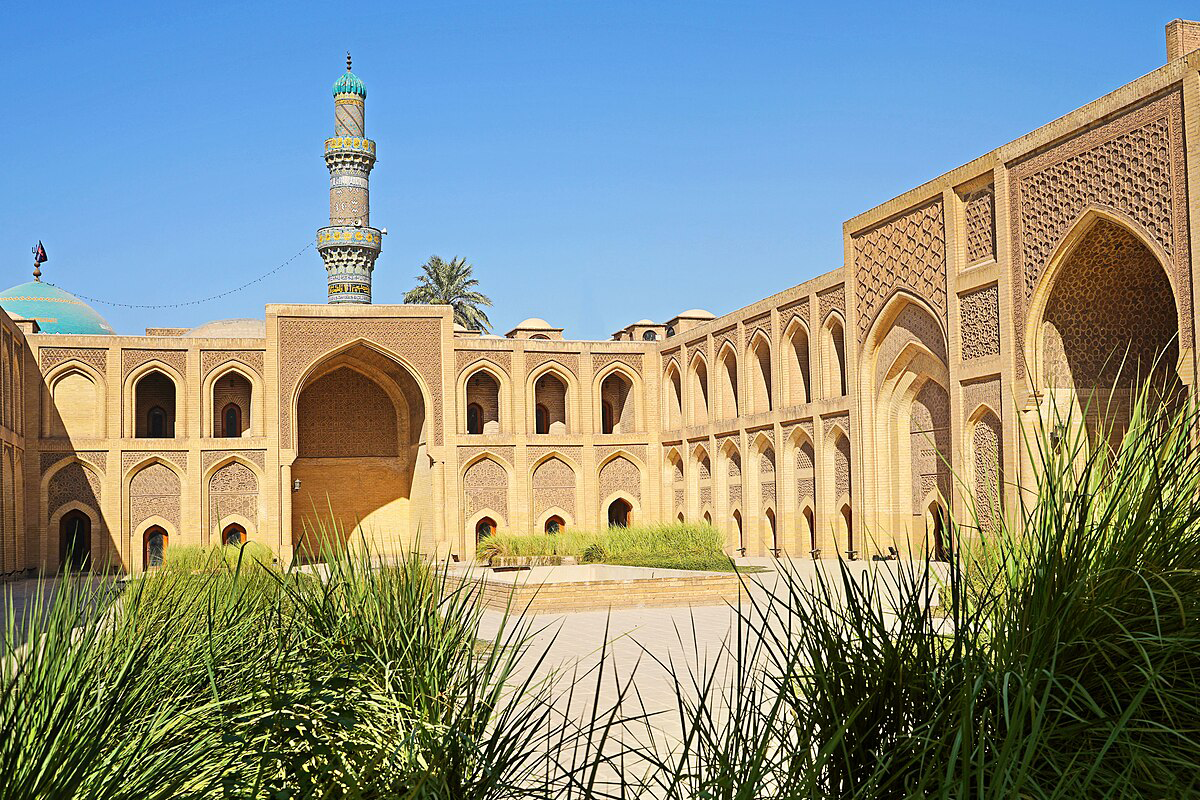
If the Iberian world reveals how knowledge can move through contact, Abbasid Baghdad shows the scale at which that exchange could operate. At its height, Baghdad was one of the great scholarly centers of the medieval world, drawing physicians, mathematicians, scientists, astronomers, geographers, philosophers, and other thinkers from across the world to preserve, translate, and expand human knowledge. The city’s intellectual ambition was, in important ways, a shared achievement across religious communities.
The Multifaith Foundations of Abbasid Learning
From the eighth century onward, Baghdad served as the capital of the Abbasid Caliphate. The Bayt al-Hikma, or House of Wisdom, is often remembered as a symbol of the city’s intellectual flourishing. Abbasid learning depended on a broad network of scholars, patrons, translators, and communities whose work crossed religious, linguistic, and geographic boundaries.
The translation movement brought Greek, Sanskrit, Persian, and Syriac works into Arabic, creating a scholarly environment of remarkable breadth. Syriac-speaking and Nestorian Christian scholars played a central role in translating Greek texts. Among the most influential was Ḥunayn ibn Isḥāq, a Christian physician and translator whose renderings of major Greek medical and philosophical works helped make them available to Arabic-speaking scholars. Jewish scholars also contributed significantly to the intellectual life of the period. In the late 9th and 10th centuries, Jewish bankers, financiers, and administrators held important positions at the Abbasid court, reflecting the community’s broad integration into the empire’s economic and political life.
Scholarship, Patronage, and Imperial Need
This was not simply a story of goodwill. It was tied to political need. Christian communities in Baghdad held officially recognized status within the caliphate. The Nestorian Patriarch was acknowledged by the caliph. Christian and Jewish physicians, administrators, and scholars held significant positions at court. The empire relied on communities with deep linguistic and scholarly expertise to help govern a religiously and ethnically diverse population. Religious differences did not prevent collaboration. In some cases, it made exchange essential, as knowledge moved through multilingual and multireligious networks that no single community controlled.
Intellectual Achievement Within Constraints
The achievements of Abbasid Baghdad should not obscure the limits of the society that produced them. Intellectual collaboration across religious lines did not erase unequal legal standing. In Baghdad, extraordinary scholarly creativity and structural inequality existed in the same world. Patronage made this work possible, but it also tied scholarship to the priorities of rulers and the realities of imperial power.
The same dhimmi framework that offered protection to non-Muslim communities also imposed legal and social restrictions, such as regulations governing dress, public worship, and the construction of religious architecture. These restrictions varied by ruler and period, but remained a persistent part of the legal landscape. Baghdad shows that societies can achieve remarkable intellectual feats while remaining deeply unequal.
Interreligious Encounter Beyond Formal Dialogue
Baghdad broadens our understanding of interreligious encounter beyond formal dialogue between religious leaders. It reminds us that interreligious encounter operates not only through worship or debate but also through shared labor. Coexistence and shared life often grow from the practical work of living and working alongside one another, not only from shared belief.
In Baghdad, communities met in libraries, courts, and hospitals. They came together through translation, medicine, philosophy, administration, scholarship, teaching, and daily service. In these settings, people of different faiths lived and worked in the same institutions and depended on one another’s knowledge to understand texts, heal bodies, and govern the world around them.
What Abbasid Baghdad Reveals
Baghdad demonstrates that coexistence can produce lasting intellectual achievements even in the absence of full equality. It also reminds us that the legacy of interreligious encounter is often written in the practical labor of people living in connected worlds. For MA in Interreligious Studies students, Baghdad is an essential case study because it moves the conversation beyond formal dialogue alone. It shows how diverse communities meet through the shared work of translation, medicine, and administration. The most enduring lesson of Baghdad is how communities influence one another through shared work, not just shared belief.
Next in the Series: The final post turns to Istanbul and the Ottoman millet system, where religious pluralism was organized through law, communal recognition, and imperial authority.
Tags: case studies in interfaith coexistence, case studies in pluralism