
In Memoriam: Abdulaziz Abdulhussein Sachedina (1942–2025)
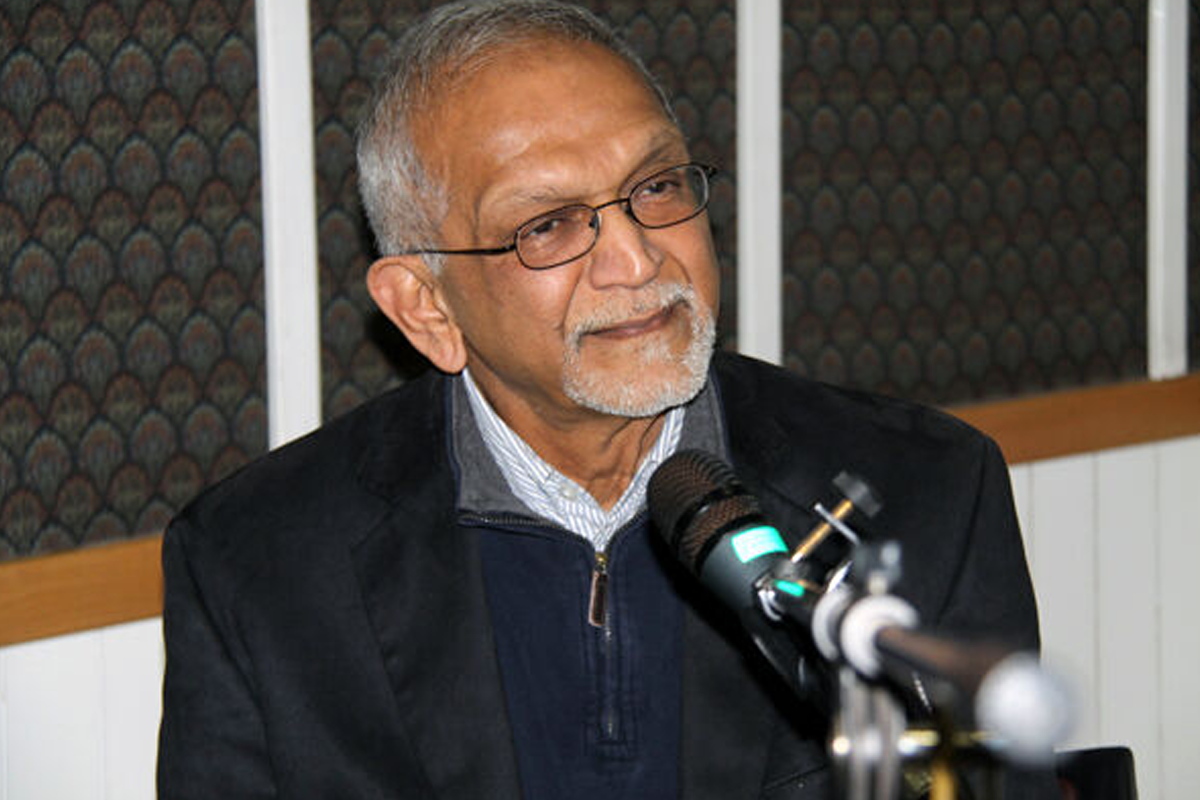
Abdulaziz Abdulhussein Sachedina, a prominent and sometimes contested voice in the academic study of Islam, died on Dec. 3, 2025. Over nearly five decades, he wrote on Islamic ethics, theology, political thought, and on interreligious engagement. He also spoke at HIU, then Hartford Seminary, in 2013 on the political theology of pluralism in Islam.
Born in 1942 to a Twelver Shia Khoja family in what is now Tanzania, Sachedina pursued an education that crossed linguistic, geographical, and intellectual boundaries. He earned bachelor’s degrees from Aligarh Muslim University in India and the University of Mashhad in Iran, where he studied with the religious reformist Ali Shariati and, apart from the university, undertook madrasa training. He completed his Ph.D. at the University of Toronto in 1976 under the supervision of Roger Mervyn Savory, a historian of the Safavid period.
Sachedina began his academic career at the University of Virginia in 1976 and eventually held the Frances Myers Ball Chair in Religious Studies. In 2012, he was appointed to the International Institute of Islamic Thought (IIIT) Chair in Islamic Studies at George Mason University. Over the course of his career, he also held visiting positions in Canada, the United States, Iran, and Jordan.
His published work combined close engagement with classical sources and an interest in contemporary ethical and political questions. Islamic Messianism: The Idea of Mahdi in Twelver Shiism (1981) presented an expanded version of his doctoral dissertation. The Just Ruler in Shiite Islam (1998) advanced a particular reconstruction of juristic authority in Imamite law. Some of the themes and positions in these writings for which he was sharply criticized were later echoed, in modified form, in the work of some scholars who had earlier challenged him. His translation of Grand Ayatollah Khoei’s al-Bayān fī tafsīr al-Qurʾān, published as Prolegomena to the Qur’an, made that text accessible to a broader Anglophone readership. In The Islamic Roots of Democratic Pluralism (2000) and Islamic Biomedical Ethics (2009), he brought classical categories into conversation with contemporary debates in political theory and applied ethics.
Throughout his career, Sachedina argued that Islamic intellectual traditions should be articulated in relation to contemporary ethical and political concerns, rather than confined to purely intra-textual or historical debates. His writings provoked disagreement over method, argument, and confessional positioning, but they also contributed to ongoing clarification of key terms and concepts within the study of modern Islamic thought.
I had occasion to meet Professor Sachedina in a few communal religious gatherings. Those interactions, though limited, offered a glimpse of the intellectual seriousness and personal composure that also marked his academic work. Sachedina leaves behind a rich corpus of scholarship — historical and doctrinal studies, translations, and contributions to ethical and interreligious discussions. His death closes a chapter in the recent history of academic work on Shiism and Islamic thought more broadly.
May God, the Most Compassionate, accept his efforts and grant him everlasting peace and rest.
Hossein Kamaly is Professor of Islamic Studies and Interreligious Studies at HIU and holder of the Imam Ali Chair in Shia Studies and Dialogue among Islamic Schools of Thought.